Yes, it is actually possible to grow whilst cutting costs… by Niklas Hageback

Yes, it is actually possible to grow whilst cutting costs…

Despair not and come out of the Corona virus crisis as a winner

by Niklas Hageback

A compiled excerpt from a forthcoming book on digital leadership due for publication in late 2020

 NIKLAS HAGEBACK. The outbreak of the Corona virus is causing dire economic effects with companies across industries being badly affected from a dramatic slump in demand, and some already starring into the abyss with imminent bankruptcies looming. Where growth was everyone’s strategy only a few weeks ago, quite literally staying alive is now the only thing that matters. But in the midst of all this human and financial hardships, opportunity lurks, this as a resourceful leadership can turn this crisis it into a watershed moment, utilising to its advantage the momentum for change that has been provided and quickly reset the organisation to higher productivity and growth whilst the competition are at peril of succumbing. This might be an equation you thought not solvable, and no, proposed is not a ‘fortune favours the bold’ approach, but au contraire the reduction of risks and costs work as enablers for productivity and growth.

There are costs and then there are costs…

This acute focus on costs is now an almost forgotten skill, as over the last decade with the global economy recovering quickly after the financial crisis of 2008, spurred by an unprecedented loose monetary policy, cost only played a minor role as executives crafted growth strategies, in particular by deploying the latest in digital technologies. Spending more with a view to grow more has been a mantra to live by, and it by and large made sense in a low interest environment, but as a side effect slack has been allowed to fester. However, now an urgent shock therapy is required forcing punch drunk business leaders to oversee heavy handed amputations simply to stop the bleeding, a dicey undertaking, always at risk of killing the patients they are trying to save.

To start with, costs need to be assessed, segmented and prioritised, in its most broad brushed form, one can delineate between cost cutting and cost optimisation, terms that tend to be interchangeably used but are actually distinct. A cost assessment seeks to create a more viable cost baseline, detailed at geographical and business unit levels, by ascertaining and then executing the necessary cost cuts and cost optimisations to reach a new baseline.

 Now, the Corona virus has forced many businesses to swiftly migrate to exclusively use virtual meetings and working-from-home facilities, and interestingly enough but rarely realised and capitalised on, these arrangements are nothing but a gigantic cost assessment, where in effect the minimum inputs are determined, i.e. which processes can we altogether skip?, which meetings can we eliminate?, and which people do we not really need to participate in these meetings and processes to keep the business going? As a case in point, the very nature of virtual meetings make them much more succinct than in-real-life meetings, and the group dynamics will drastically change, the previously dominating windbags hijacking meetings with a constant oratory of platitudes and smooth talking will fade out, as ambiguities and nonsense really does not fare well in a virtual setting, and instead the straight talker with meaningful and productive content, usually backed up by action, will come to dominate. For the observant and perceptive leader, this can serve as a true wake-up call to realise who the value-adding contributors of the firm are, and the ones that rarely delivers, and use these insights to calibrate the team compositions to achieve cost efficiency and productivity improvements. So, by acknowledging the productivity perspective through these temporary re-designs of processes and the meeting bureaucracy, they become an important part of a cost assessment workout, obviously needing to adjust for more permanent arrangements that introduce a new way of working, forming the backbone of a leaner organisation. A comprehensive cost assessment exercise takes aim at a number of factors;

 ·        Reduce bureaucracy by removing organisational layers;

·        Clarify roles and responsibilities and terminate duplicates;

·        Eliminate redundant or irrelevant functions, processes, or activities;

·        Consolidate functions where possible;

·        Applying lean techniques to repeatable or low-value processes;

·        Reconsider the role of the corporate center, and;

·        Seek to introduce digital solutions to automate activities.

In essence, cost cutting refers to imminent actions aimed at slashing expenses not considered critical for business, such as elimination of certain staff, typically contractors and consultants, consolidation of duplicate functions, the ban of business travels, but also pay cuts and other benefits reductions. Any costs that can be reduced immediately with no or little negative effect on revenues but with direct cost reducing impacts must be considered. A cost cutting workout should follow a one-off assault approach, expedited through a crisis management ethos that instills a sense of urgency, which provides a window of opportunity to push through and gain support for the necessary drastic measures. The momentum is kept going through daily gatherings to keep close track, monitor progress and broadcast status of the assigned performance metrics, typically dollar amounts and dates, until the targets are reached.

Cost optimisation, on the other hand, is rather than a one-off immediate undertaking, a continuous effort specifically designed to drive spending- and cost reductions while maximising business value, by applying a strategy perspective on where the business should be, and in where a digital transformation will play a pivotal role. A cost optimisation au contraire to cost cutting will include investments while still engaging in reducing costs, ideally aspiring to balance these out, but mismatches in cashflow are likely to occur and ensuring that credit lines are kept open must be part of this strategy. To in times of economic downturns, invest in various digital tools might be regarded as a hazardous proposition, but it has proved to be the epitome of what is considered a sound investment and has stood the test of time, as both technology, as well as, high value-add employees can be obtain for a discount. Thus, cost optimisation consider factors such as;

·        The core business model and its product and service focus; whether to enter or exit businesses, geographies, joint ventures, and in particular looking at low growth- and/or low margin activities;

·        A rethink of the organisational design, including the relationships between the corporate centre and the business units;

·        Resolve any unfinished projects, such as incomplete merger integrations or abort/delay potential takeover plans, and;

·        Identify weak spots in the organisation, which could be due to a raft of factors, including, unnecessary complexity slowing down processes, not employing productive enough people, poor leadership, extensive bureaucracy, and systems and applications needing upgrades or complete revamps.

In many of the above areas, digital tools will help to streamline processes, reduce labour costs through automation, and by disrupting existing business models one can develop new capacities based on digital capabilities which open the door to new commercial opportunities, making it possible to distinguish oneself in the marketplace and increase revenues. Some key strategic areas, but far from all, where digital transformations should cover are;

·        Process automation, by mapping out the steps of the process apt for automation, for manufacturing finding solutions in robotics and leverage Internet of Things to build intelligent business processes. For service providers, seek out suitable AI applications, such as virtual assistants and various types of bots.

·        Optimise supply chains through increased automation

·        Reduce inventory by deploying automation, therby minimise stockpiling and improve the balance sheet

·        Outsource less vital functions to low cost providers

·        Advance the integration of CRM systems to become an essential part of the sales function

·        Digitise the customer journey and provide customer self-service technologies, which must be continuously updated and established on the customer perspectives and experiences.

·        Employ data analytics in a pro-active manner to identify new commercial opportunities, improve customer retention and marketing responses.

·        Improving data management, facilitate access to data across the organisation, seek where possible to offer real-time information and encourage employees to share and use data allowing for faster, and hopefully better, decisions and the creation of business value.

With costs coming under control, engage Growth Hack

The last couple of bullet points alluded to areas where digital transformations in addition to reducing costs also provide entrepreneurial approaches to grow the business, in both new and existing areas. As the collation of customer data and a tracking of their behaviour can be fashioned in a more structured way through repositories, allowing for business intelligence- and data analytics tools to identify commercial patterns of a dynamic nature, notably giving an opportunity to understand market trends for an economy in recession and to develop service and product offerings for such meager conditions.

The growth hackers need to work in close conjunction with the marketing team, with somewhat blurred boundaries on where responsibilities start and end respectively.

As the depiction highlights, cost cutting, cost optimisation and growth hack can through a consolidated manner by being executed in concert, reduce costs and risks, and at the same time spur productivity and growth.

Who is best set to lead this effort?

A venture of this scale is nothing but a radical transformation of the organisation, leaving no stones unturned, affecting everything and everyone. By necessity, invasive and all-encompassing, with many moving pieces that needs delicate co-ordination, and it goes without saying that timing and speed will be mission critical, that can be enabled through Agile methods ‘on steroids’, this as delays risk de-railing an otherwise well thought-through execution plan.

Thus, to oversee and manage this highly complex type of enterprise will require nothing less than a leadership extraordinaire, and the plain Jane/James type change manager need not even apply, as the role demands considerable talents, an exceptional capacity for lateral thinking, backed by a multitude of experiences extending far beyond only a technical competency, highlighted through a helicopter perspective truly understanding all aspects of the business architecture. And last but probably most important, the person in charge needs a personality that radiates the rare high energy ‘can do’ leadership quality to be able to swiftly and as required, relentlessly deal with the problems that are bound to arise along the way.

These qualities are occasionally, but far from always, bestowed only a handful of senior executives within the organisation, such as the CEO, the COO and Head of Sales. But they will generally be too busy with their daily activities and routines, and in times of crisis constantly called for to broadcast reassuring messages through various communiques and townhall meetings to both internal and external stakeholders, not least worried creditors and investors. By being engaged in other activities, it will severely slow down the accelerated pace required to plan and execute, a crucial success factor which can only be achieved through a dedicated leadership commitment. Then there are sentimental aspects to consider, as it requires staying emotionally detached to not allow for nostalgic sentiments to certain functions, products or staff, to cloud one’s judgement in making the correct but painful decisions, something long serving members of an organisation might not always be capable of, emotionally burdened by various vested interests. Hence, all considered, engaging an independent consulting firm with extensive pedigree in comprehensive and commercially sound transformations is probably the way to go.

Way Forward

Make sure to pre-order your copy of Leadership in the Digital Era – Renaissance of the Renaissance Man for a detailed outline on how an integrated cost cutting- and digital transformation strategy will deliver rapid productivity improvements and growth in a time when your less informed competition is fighting for survival!
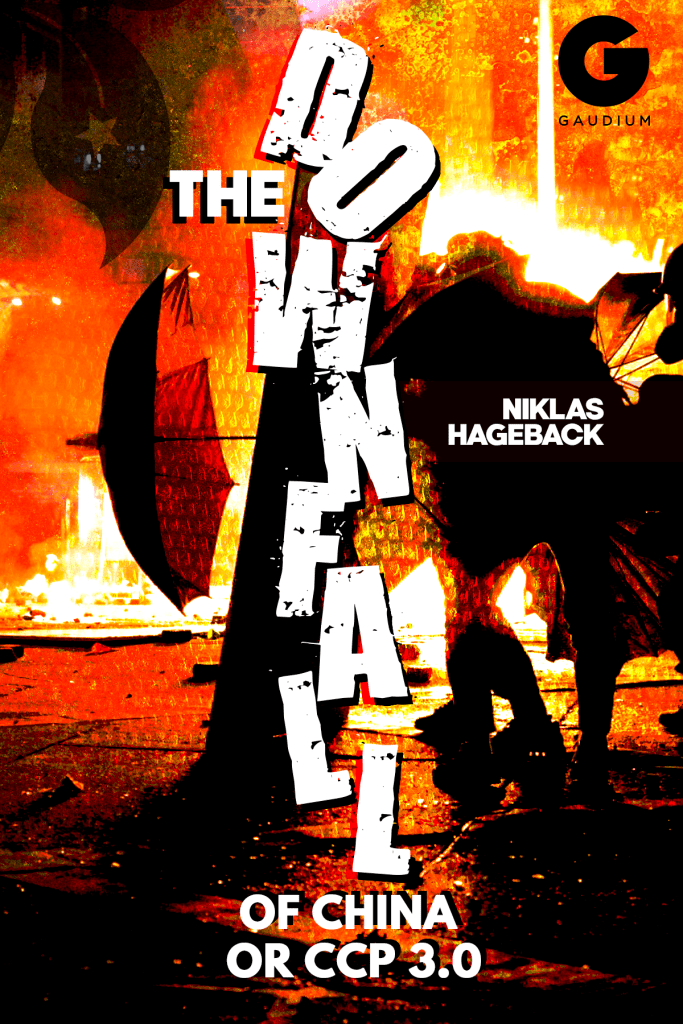
The Downfall of China or CCP v3.0 by Niklas Hageback

NIKLAS HAGEBACK. The Downfall of China or CCP 3.0 is a book describing why the CCP now has arrived at a critical junction where the path chosen will decide whether it will face an impending downfall, or yet again can manage to radically transform itself and weather the storm. The CCP has encountered similar decisive moments before when it cleverly managed to re-invent itself into a v 2.0 of sorts, from Marxist dogma and introduced state controlled capitalism, which became a magnificent success. But the proverbial low hanging fruits have all been picked and the problems cropping up are of a psychological rather than an economic nature as China is embarking on a digital economy upgrade driven by innovation. However, an innovative economy rests on creativity which requires critical thinking and an open mind which one cannot foresee where its manifests will end up, something which by default will make any authoritarian regime uneasy, herein lies a dilemma; creativity or conformity? The CCP is a political party in dire need of soul searching, something prevented through an outdated organisational structure and the question remains, will it manage to yet again transform itself, this time to a CCP v3.0?

Pre-order your copy now, due for release 15 September 2020 by Gaudium.

Presenting a teaser of my forthcoming book UNKNOWN KNOWNS – the mystic origin of human creativity and irrational behaviour by Niklas Hageback

NIKLAS HAGEBACK. Presenting a teaser of my forthcoming book on computational creativity and human irrationality for your perusal, UNKNOWN KNOWNS – the mystic origin of human creativity and irrational behaviour. The book is due for publication in early 2020.

INTRODUCTION
Le coeur a ses raisons que la raison ne connaît point
(The heart has its reasons which reason does not know) Pensées, nr 277. French mathematician Blaise Pascal (1623 – 1662)
There are certain decisive characteristics in the mental faculties that distinguish the human species from other mammals, in particular our creative capacity with its ability to bring about extraordinary productivity and innovations, and our seemingly irrational behaviours that make accurate projections of human actions, both individually and collectively, at times, difficult. These capabilities have however proven stubbornly difficult to explain, such as the critical junction of creative breakthroughs which often come through so-called Eureka moments, but its activation and origin remain enigmatic, and deliberately trying to provoke it into action is often futile. Equally difficult has it been to analyse irrationality where little is known of its functionality and its motivations, to the extent that in social sciences, bar some aspects of behavioural economics and finance, it is routinely overlooked, where the paradigm of the rational man theory is assumed to average out any quirky behaviour, even as it appears collectively. And this has consequences as societal structures, including legislations, are developed on the assumption of its citizen’s rationality. It remains one of the least researched areas of the human behaviour, generally swiftly glossed over, considering any occurrence of irrationality as an act of ignorance or even (emotionally driven) stupidity.
There are however plausible theories, supported by a body of research, that can explain the advent of breakthrough creative thoughts, as well as, irrationality, and intriguingly enough both appear to originate from the same source. But does that mean that nouvelle innovations will at first appear as irrational in the contemporary context, and by its very nature alter the juxtaposition boundaries between irrational and rational? If so, at least certain aspects of, irrationality becomes a highly valuable characteristic from the commercial and scientific perspective.
What could this source then be, and if ascertained, can it be modelled? A number of independent studies from different academic perspectives point to unknown knowns, sometimes labelled as strange attractors, archetypes, reference classes, or neurological patterns, to which the human thought process arranges and categorises itself. These unknown knowns as the name alludes typically operate under our level of awareness, therefore being of an allusive nature, and whilst they often carry a feeling of familiarity, they also include aloof attributes, hence the double-entendre label is apt. This ambiguity makes unknown known difficult to articulate and formalise into a blueprint as it is hard to fathom their influence on shaping human thoughts. Thus, it is not unusual that creative manifests are considered crafted through irrational means with their seemingly relaxation of the dictates of the rules of inference, as well as, the occasional quantum leap. However, it must be that the unknown knowns come with structures and rules, otherwise it would always appear completely chaotic and random, much like the mental inner world of a schizophrenic patient. But as they are residing in the unconscious part of the human mind, our comprehension of them remain superficial, at best. Given that this phenomena is so poorly understood, it carries mystic, even magic properties, and have been described in areas outside scientific innovations and breakthroughs, such as poetry, art, music, and even religious experiences. Albeit even in such disparate processes, there are shared commonalities that can be observed, indicating an universal mental mechanism, agnostic of scope and topic as it transcends at the meta level.
At the root of unknown knowns is the enactment of an enlightenment process of sorts, where suddenly a problem that has been deliberated on finds a solution, or it could be the artist’s impromptu inspiration to depict, write or compose, or a religious insight of celestial magnitude. It is typically preceded by extended periods of frustration and procrastination where in this prelude, strenuous mental efforts are invested. For the surrounding entourage, and indeed often for the innovators or artists themselves, most of the creative process appear irrational, even mystical, and it is often only with the historical hindsight at hand that a sense of rational insight materialises.
Unknown Knowns – the mystic origin of human creativity and irrational behaviour is a book for anyone with an interest in psychology, in particular the unique human faculties of creativity and acts of irrationality, tied together through structures in the unconscious part of the mind. By understanding the hidden rules they operate by, the reader is equipped with the insight and knowledge to forecast irrationality that so much forms human behaviour, as well as, an improved capacity to creative thinking through a blueprint creativity machine, a facilitated artificial intelligence tool developed to automatically enhance the creative process.
Unknown Knowns is structured in six chapters;
Chapter 1) The Mystery of Irrational Thinking
Irrationality has often come to equalise madness as it tends to so distinctively conflict with logic inference, but is it really so? This chapter reviews what is known about irrational thoughts and behaviour, and how come it is so prevalent in a world supposed to operate on rationality alone.
Chapter 2) Creativity Is an Act of Destruction
A lot of research has been put into the creative process, given the great value it holds, both commercially and intellectually, on our lives. Many interesting findings have been made which will be covered in this chapter, however of the most critical part of the process surprisingly little is known. The chapter will also ponder over the question whether it is possible to consciously produce targeted creativity.
Chapter 3) The Magic of Creation
The creative genius, sometimes seen as also having a streak of madness, is clouded by mystery as their creation of art, music, poetry, even mathematics and religious insights often carries seemingly divinelike properties. Interestingly enough when comparing the creative process for innovation and scientific breakthroughs with the creative process for artists, in accordance with, for instance, the painter Wassily Kandinsky’s theoretical writing on art, as well as, religious experiences such as the theologist Rudolf Otto’s concept of the Numinous, their descriptions share remarkable similarities. Is it so that the process of creativity, independently of themes, carries universal properties?
Chapter 4) The Unknown Knowns
The unknown knowns have been described in different academic disciplines, however given the various labels, a comparative analysis where disparate scientific evidence can be paired together and form a holistic view of any structures and rules that organises and augment creativity, has rarely been done in a comprehensive manner. With a more facilitated understanding of the unknown knowns, irrationality comes in a different light altogether, perhaps it is not irrationality after all, but rather an enhanced and expanded view of reality being contemplated through relaxing, in parts, the laws of logic and conjugating it with categorisation albeit of the more unusual type?
Chapter 5) Computational Creativity – A Blueprint
With a thorough understanding of the unknown knowns and how they operate within the confines of the human mind, an interesting value proposition arises, can we artificially create creativity? By modelling the structure and patterns of the human mind, it should be possible to design a blueprint of a creativity machine of sorts, in other words, computational creativity capable of producing human-level creativity. The power of developing such an artificial intelligence tool lies in;
· its scenario generating capacity which by far exceeds that of what humans are capable of, and;
· its ability to create random scenarios, even such of a bizarre nature that supersedes that of human imagination.
Such a tool can in a bespoke manner be crafted and ‘loaded’ for designated research projects and similar. Methodologies like conceptual blending, drawing from the intersection of different frames of references, can be deployed to generate creative scenarios. This chapter sums up the design steps of a blueprint that the reader can apply to develop his own creative contraption to enhance his innovative capabilities.
Chapter 6) Conclusions
The concluding chapter summarises the findings and highlights the development of robots capable of generating creative solutions with the apparently irrational behaviour, much in accordance in how, at least some of us, humans behave.

Why (so many) humans would fail the Turing Test by Niklas Hageback

NIKLAS HAGEBACK. If you are working on developing bots mimicking human reasoning vis-à-vis beating the Turing Test ( I am), this might be an article that interests you….
Why (so many) humans would fail the Turing Test
The mythical Turing Test has for almost 70 years been seen as the litmus test to determine whether machines could think as humans, but how valid is it really? What is it that the test actually measures, and what if humans fail it, does that mean that they are not capable of reasoning? These questions come to the forefront in the development of AdBots designed to be indistinguishable from humans.
The Turing Test was developed by the English mathematician Alan Turing in 1950 as a mean to assess whether machines had the ability to display humanlike intelligent behaviour to the point that they no longer could be distinguished from humans.
Turing proposed that the test should be designed so that a human evaluator would judge text-only conversations between a human and a machine from a natural language perspective, being aware that one of the participants was indeed a machine. Typically, the tester tries to snare the assumed machine with plethora of cognitively related questions, which could be of an arithmetic nature, i.e. what is 12 x 12? that a human should be able to answer, blended with inhumanly difficult questions that a human should fail, as well as, questions of a more philosophical nature, such as, if you close your eyes, does that mean that the car in front of you no longer exist? (Whilst the answer to this question might seem obvious to you readers, in fact most people, due to a common psychological phenomena, often in practice do chose to overlook the obvious, pretending it is not there, or the reverse assuming things that are not, in accordance with The Emperor’s New Cloth Syndrome.)
The machine would pass the test, if the evaluator was not able to identify it as a machine through this battery of various questions aiming at seeking out the characteristics of human reasoning. Given that level of natural language is a screening criteria, the decisive qualifying quality is more about the machine’s ability to mimic how a human would communicate and reason rather than giving correct answers to all queries.1
And whilst the Turing Test has been criticised from philosophical reasons, it remains a standard test to determine whether AI applications can assume humanlike reasoning, however the definition of human reasoning remains elusive, what is it really? Then there also is the much less discussed other side of the coin, what about humans failing the test? Would that mean that they are bereft of human reasoning? This has been something of a blind spot in the exclusively one-sided Turing Test, but carries a significant impact as the assumption has always been that whilst machines could be caught out as just being machines, humans would always pass the test and never assumed to be machines. If the test can identify an actual human lacking the ability to reason like a human, well, how can we then know for sure that a machine is not reasoning like a human?
What ‘type’ of humans, if any, can one then expect to fail the Turing Test, and more interestingly, why would that be?
To start with, it is important to have an understanding of the variation of mankind’s cognitive capabilities as it closely relates to the quality of human reasoning. If using IQ as a rough proxy measure of cognitive capability, the mean global IQ is estimated to be about 88.2 Assuming a normal distribution, half of the world’s population are above 88, and the other half are below it. Having an IQ below 90 however comes with noted consequences, in antiquated psychological publications it is classified as dullness, characteristics including;
· Generally not suitable for higher education, and:
· They remain above the threshold for normal independent functioning and can perform explicit routinised hands-on tasks without supervision as long as there are no moments of choice and it is always clear what has to be done.
If having an IQ below 80, previously classified as borderline deficiency, the limitations become even more profound;
· Limited trainability and have difficulties with everyday demands, and therefore require assistance from family or social workers to manage their lives;
· Will struggle with even low-level education, and;
· Are generally unemployable unless for simple tasks requiring supervision.
And an IQ under 70 marks the boundary for where investigations of mental retardation usually commences.3,4
Whilst these kinds of descriptions rarely are accepted today due to the sensitivities in talking about cognitive levels, various euphemisms are instead routinely deployed to tone down the previous bluntness but however vague the contemporary wordings are, the gist of the previous descriptions still apply, as they remain painfully factual. So, regardless of how unflattering and uncompromising the characteristics of the below IQ 90 group are, they highlight difficulties with comprehending features such as simple arithmetic and more abstract philosophical ponderings. In other words, they would struggle to answer the aforementioned types of questions, with the risk that they by the Turing Test evaluator be declared lacking the capacity to reason like humans, and this might apply for half of the world’s population.
A side point is the estimate on how many of these individuals that will be considered employable in a highly automated knowledge-based economy, where machines’ level of reasoning starts to supersede theirs, let alone having considerably higher work capacity. For a truly gloomy scenario of the future, please see Idiots Breed Idiots, why men no longer are created equal. 5
But there is also another cognitive cluster that might fail the Turing Test, and they are at the other end of the IQ distribution. Individuals with a noted high IQ but with autistic (or similar) traits that always takes things a bit too literal and tend to respond in a more robotic rather than in a human fashion. This as there appears to be something lacking that is above and beyond pure logic, perhaps it is not having the capability to comprehend the emotional status of their counterparts, not being able to fathom what is conveyed when reading between the lines. This is also the group that is likely to occasionally be able to answer inhumanly difficult questions.
Now, I am not the first to point out this issue, far from it, as others have noted the difference between, at least some, intelligent behaviour and human behaviour, and the Turing Test values human behaviour ahead of intelligence in order for a machine to pass it. Pointing out humans as machines in evaluations is referred to as the confederate effect.6,7 But beyond observing and labelling this effect, there have been few, if any, studies of the practical consequences.
Human communication is miscommunication
If the Turing Test is likely to fail large segments of humanity, what it is that it then actually is testing? Implicitly, it seems to expect a minimum quality of human reasoning, which might be in excess of what the average < IQ 90 person could muster, however it must also capture the ability to grasp emotional insights and ambiguities, both which appear to relax certain deductive properties.
But what many, including Turing Testers, tend to forget is that human communication is entangled with miscommunication, and much of our communication and reasoning is devoted to the attempts, often futile, to overcome it. This miscommunication is due to humans need to be able to handle and respond to conversations that contains;
· Ambiguity;
· Incomplete information;
· Incorrect Information, and;
· Multiple points of view, including opinions & hypotheses
The recognition of the above utterances, including any emotions they might convey, even covertly (the understatement often seen as the definition of Englishness being a case in point), require considerable cognitive enterprise and energy. But unfortunately, the complexities of reasoning do not end here, this as the human mind consists of a conscious and an unconscious part with separate logic structures and these absorb reality in diverging chunks, with the former, truncated through narratives and norms, and the latter able to amass broader perceptions of reality. These are held together and controlled through a governing mechanism. They interact in accordance to a protocol which often manifests in decision-making that can be perceived as seemingly irrational but it is far from it, rather it follows a diverging schema aligned to attain goal maximation. This brings an element of irrationality in human reasoning that is difficult for a machine to replicate.
So, to correctly interpret a counterpart’s opinions and questions, it calls for an ability to understand his specific narrative, whether that be of a cultural, political, or religious nature, or usually a combination thereof. As narratives curtail reality into a social reality where reasoning is often confined to the information that exists within its boundaries, ignoring a diverging actual reality through dogmatic tenets. This means that even when arriving at conclusions following the correct deductive steps, for a person operating on a differing narrative it is seen as an aberration, even bordering to self-deception.
In essence, to develop machines exhibiting human like behaviour, they must be capable of replicating and standardising all of the above features, including unconscious contents that influence our language and actions, into a fully computational model. A difficult but not impossible feat, far from it.
Why is the question of what human reasoning actually is so important to us?
Well, I work with a startup that are developing AdBots, where one of the defining design features is their indistinguishable dispositions from online manifests of human reasoning. In that sense, they must be devoid of any mechanistic thought- and language patterns that might out them as bots. In attempting to harmonise artificially induced thought patterns with human thought patterns, come the insight that the modeling of human reasoning needs to mimic the imperfections that is what makes it precisely human. Thus, understanding what the Turing Test is trying to measure, and ultimately how humans appraise social media interactions, therefore serve as quality markers in the calibration and testing of bots.

Footnotes & References
1. Turing, Alan. “Computing Machinery and Intelligence” Mind – A Quarterly Review of Philosophy and Psychology, Vol. LIX. No. 236. October, 1950.
2. Lynn, Richard and Vanhanen, Tatu. “IQ and the Wealth of Nations” Westport, CT: Praeger, 2002.
3. Kaufman, Alan S. “IQ Testing 101”New York: Springer Publishing, 2009. p. 110 ctd.
4. Terman, Lewis M. “The Measurement of Intelligence: An Explanation of and a Complete Guide to the Use of the Stanford Revision and Extension of the Binet–Simon Intelligence Scale” Riverside Textbooks in Education. Ellwood P. Cubberley (ed) (Boston: Houghton Mifflin, 1916). p. 79.
5. Hageback, Niklas. “Idiots Breed Idiots, why men no longer are created equal” Sweden: Logik Förlag, 2018.
6. Saygin, A. P. & Cicekli, I. “Pragmatics in human-computer conversation” Journal of Pragmatics, 34 (3), 2002. p. 227 – 25.
7. Shah, Huma & Henry, Odette. “The Confederate Effect in Human-Machine Textual Interaction” 2005.