The creation of machine generated human thinking
PUBLISHED BOOKS
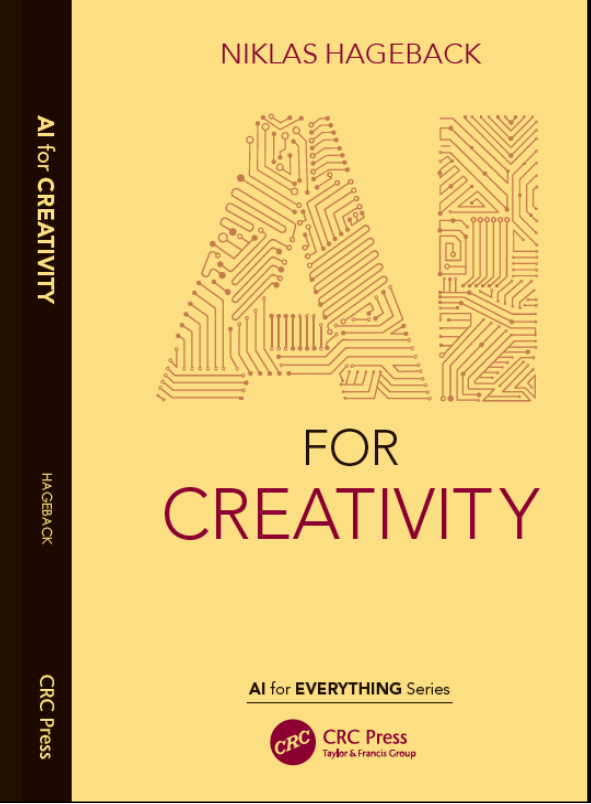
AI FOR CREATIVITY
One of the most notable features that makes us humans a distinctly unique species is our creative capacity providing, at times, an extraordinary productivity and remarkable innovations, an ability that through quantum leap innovations has propelled us to the current digital age. However, generating creative breakthroughs are easier said than done, they appear less frequent and in a more scattered manner than desired, it seems that we have not yet fully cracked the creative code, allowing us to advance academia, commerce, and science entirely at our will. There is a puzzling irrational element to it which makes creativity hard to control, much to the dismay of authoritarian regimes, and as history has shown, it is not always easy to produce the expected results to solve elusive problems, and when breakthroughs do come, they tend to carry the hallmarks of serendipity. A lot of research has been put into understanding the creative process, given the great value it holds both commercially and intellectually, but the mechanism behind our creative capabilities has proven stubbornly difficult to fully explain. The critical junction of creative breakthroughs which often come through so-called Eureka moments, its activation and origin remain enigmatic, and deliberately trying to provoke it into action has often proven futile.
However, artificial intelligence with its aspiration to replicate the human mind is set to change all that. Key areas of artificial intelligence have been progressing remarkably swift and now allow for no longer only envisaging computational creativity as a future aspiration but actually embarking on the practical work with the design and development of tools that can be embedded into the human creative process. The integration between the human mind and its artificial counterpart is thereby perhaps nearing its completion. But what will that look like and will it be the missing link in the quest for a seamless man–machine interconnectivity?
AI for Creativity is a book for anyone with an interest in the advancement of artificial intelligence, notably the truly fascinating prospect of computational creativity. By being guided on how the human creative process works, the reader is equipped with an understanding of the design principles of the ongoing research and work on various applications that aspires to empower artificially induced creativity. The book provides a fascinating read of what is currently emerging in a truly cutting-edge area of artificial intelligence, how tools are being developed to enable computational creativity that holds the propensity to dramatically change our lives.
The book is structured in four chapters that detail the creative process and what has been ascertained about it. It also makes a deep dive into the enigmatic part of creativity that borders almost to the mystical and provides a plethora of perspectives on creativity from art to science. The book explains the in-depth conceptual sketch on what computational creativity might look like and how it is set to operate, and finally, it concludes with highlights of how the holistic man–machine connect is about to accelerate human creativity into an unprecedented phase.

AI FOR DIGITAL WARFARE
With the currently unprecedented pace of technological innovations, we humans, now as always, which history well testifies to, will eventually weaponise these new contraptions. From where does this compulsion to constantly seek to improve our capacity for deadly destruction come from? Is there some perverted inclination to develop arms of everything we can get our hands on, or it possibly just our deep-rooted survival instinct at play, triggering an urge to make sure we are at all times better armed than seemingly threatening tribes? Regardless of reason, we can now but notice how also this generation of technical milestones are being weaponised, and much whether we like it or not, it heralds yet another new era of warfare. This also include the innovations in artificial intelligence, which are one of the most talked about but probably least understood of the emerging new technologies.
From our traditional split of armed forces; army, navy, and from the early 20th century onwards including air force, over the last couple of decades, the capability to also engage in digital warfare, in an ever increasing degree, can be added. Thus, questions need to be asked, do we as humans really know what we are doing when we now are weaponising artificial intelligence? Is it holding the propensity to change warfare in a way we fully have not been able to fathom yet? Are there unpleasant surprises of a collateral damage nature lurking? How exactly do artificial intelligence applications and tools introduce unique capacities that can be deployed in a military capacity? These are queries being pondered upon by war scientists in academia and war strategists in the armed forces throughout the world. It is to say the least a frontier science where most queries are open ended but are of such vital importance that they beget answers. When its potential capabilities have been fully ascertained and understood, it might come with profound insights that will change our perspective on warfare for the foreseeable future. This brings us to the gist of this book, namely how the weaponising of artificial intelligence can and will change how warfare is being conducted, and what impact it will have on the corporate world.
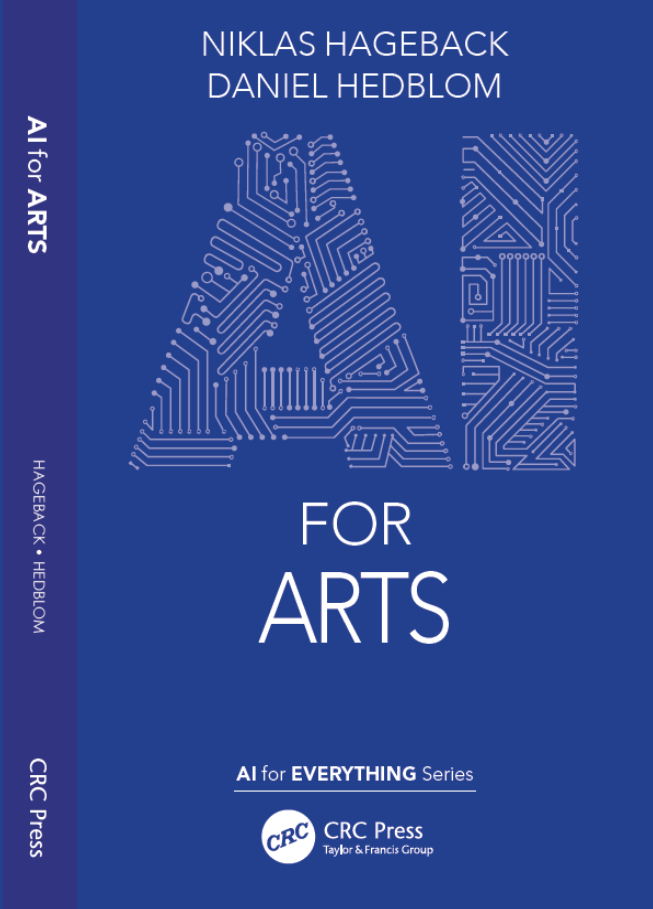
AI FOR ARTS
Art in its many forms of expression is an integral part of human life, but what is art really, and why is it so important to us? It has been with us for millennia, however, it now appears we are getting competition to the point that machines will soon beat even the most talented artists, at least in terms of technical skills. What is left for us then and will art produced by artificial intelligence be able to stir our emotions the way it has in the past. Profound questions that through art as a manifest goes to the core of what it is to be human vis-à-vis machines. An AI Art Manifesto has long been overdue… A must read for anyone with an interest in AI, aesthetics, art and design.
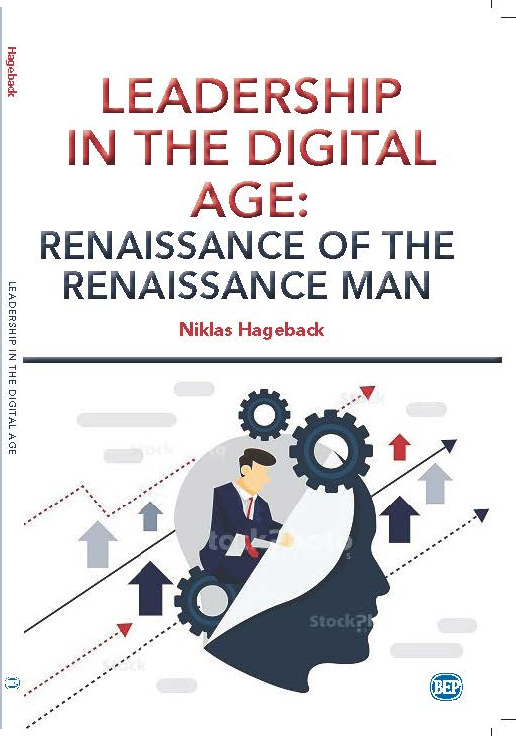
LEADERSHIP IN THE DIGITAL AGE: RENAISSANCE OF THE RENAISSANCE MAN https://www.businessexpertpress.com/niklas-hageback/
This is a book for anyone intrigued by the complexities of digital leadership that require a capability to constantly balance the routines of everyday business with the ability to innovate. Finding the appropriate mix between the dichotomy stability—flexibility has been a delicate task that few, if any, corporations have properly managed to overcome. Why is that?
This conundrum becomes acute as businesses embark on digital transformations, an often-painful venture highlighting the deficiencies of traditional management styles but also agile methodologies. They deliver results that are far below initial expectations, provide half-baked digital solutions where potential commercial gains are poorly captured and leveraged, and, far too often, not even identified.
Mismatches between technologies, the man-machine (dis)connect, or organizational dysfunctionality are typically identified as root causes, but beneath them lurks a more scathing problem: an inadequate leadership. This inadequacy rests on a lack of holistic insights backed by well-rounded skills and sets of knowledge that are required to understand all aspects of a digital transformation, as well as its participants from employees to customers. Thus, what is needed is a modern take of the Renaissance Man.

THE DOWNFALL OF CHINA - The Downfall of China or CCP 3.0 (Gaudium, 2020)
The Downfall of China or the Emergence of CCP v3.0? is a book for everyone that aspires to understand the enigmatic Middle Kingdom which has become so mighty that its domestic affairs are bound to play out also globally. The author describes why we now have arrived at a critical junction where the path chosen by the Chinese Communist Party (CCP) will decide whether it will face an impending downfall, or yet again can manage to radically transform itself and weather the storm.

THE DEATH DRIVE - The Death Drive: Why Societies Self-Destruct (Gaudium, 2020)
Sigmund Freud’s death drive remains among the most controversial concepts in psychoanalysis, something which post-Freudians never could reach consensus on. Over time, it fell into oblivion. Recent developments, however, have actualized the interest in the death drive as political upheavals and turmoil lead to societal breakdowns that, according to reigning academic theory, should not exist. It has become a burning and contentious topic.
Existing conflict theories generally unmask structural factors considered as explanatory root causes, whether social, economic, or political in nature, but, typically, these factors may have been in place for decades. These models consistently fail to identify the triggers that ignite abrupt change and what heralds it. Anecdotally, a certain self-destructive sentiment seems to suddenly hold sway, where the established order, the status quo, simply must be destroyed, and the psychological urges to do so are too great to resist. But why would individuals or collectives elect a self-destructive path, which on a superficial level seems to conflict with the survival instinct and the assumption of perpetual human progress? Thus, the question must be posed: are these manifestations of the death drive?
The Death Drive: Why Societies Self-Destruct offers an explanatory framework and methodology to predict periods of destruction that often have grim effects on societies, taking as its starting point the controversial death drive concept. The book provides a model to understand and forecast the seemingly irrational destructive human forces that hold such great and sinister influence on world affairs.

IDIOTS BREED IDIOTS - Idiots breed Idiots - why men no longer are created equal (Logik, 2018)
With a highly provocative title the author presents a book of utmost importance for understanding current developments, primarily in the Western World. In Idiots breed Idiots Niklas Hageback describes the history of Eugenics, and how events that after the Second World War “should never happen again” in reality are happening ever more today, through increasingly advanced prenatal diagnosis and abortion.
Hageback’s account presents an unbiased discussion about subjects that are otherwise often very emotional, and in many cases have been silenced completely, even though their impact on society is significant, if not crucial. The author refers repeatedly to the latest research on the topics discussed, and each chapter is presented with an extensive list of references and footnotes.
Hageback summarizes what is now known about general intelligence, measured as IQ, and shows how the average IQ for a country correlates with GDP per capita, levels of unemployment, welfare, health care and crime. And maybe even more interesting, how a change in a country’s average IQ affects these factors. He demonstrates that cognitively less-demanding jobs are now being automated, and discusses the socioeconomic impact of this on society, as well as the demographic consequences. He shows that there is an ever-growing division today between groups that can be increasingly distinguished by their IQ levels. Based on the way society looks today, it is possible to expect a continued tendency for these groups to live, socialize and produce children within each group, and also to produce different numbers of children depending on the economic conditions for each group. How is society impacted by the fact that “Idiots breed Idiots”?
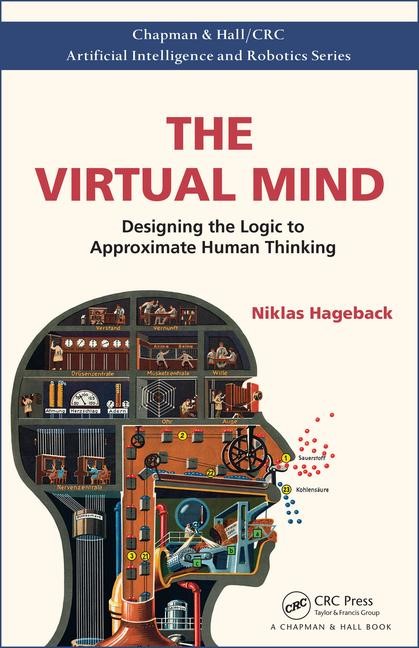
THE VIRTUAL MIND - The Virtual Mind - Designing the logic to approximate human thinking (Chapman & Hall CRC, 2017)
The Virtual Mind: Designing the Logic to Approximate Human Thinking, through an in-depth and multidisciplinary review, outlines and defines the underpinnings for modelling human thinking through
approximating the mind. Whilst there are plenty of efforts underway trying to mimic the brain, its complexities have so far proven insurmountable. But replicating the abstract notion of the mind provides a viable and quicker route. Broadly, the mind consists of a conscious and an unconscious part with separate logic schemes and these absorbs reality in diverging chunks, with the former truncated through narratives and norms and the latter able to amass broader perceptions of reality. These are held together and controlled through a governing mechanism. With the replication and establishment of the mind’s mechanistic rules and dynamic constants, tested through a big data approach from public media, it allows for standardization and machine generated human thinking, a Virtual Mind.
A virtual mind is able to cover a wide array of applications, in particular forecasting of human behavior and decision-making. In essence, the whole socioeconomic spectra can be captured, including politics, financial markets and consumer patterns. Another area of potential application would be to augment various game software and of course, it would be applicable for the man-machine connect.
The book guides the reader on how to develop and produce a machine generated virtual mind in a step-by-step manner. It is a must for anyone with an interest in artificial intelligence, the design and construction of the next generation of computer logic and it provides an enhanced understanding of mankind’s greatest mystery, the workings of the mind.
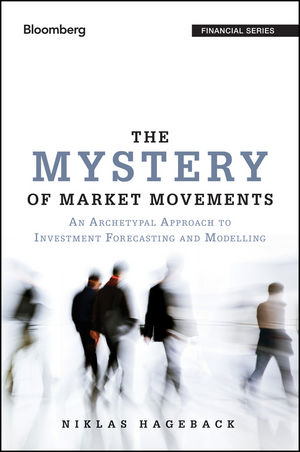
THE MYSTERY OF MARKET MOVEMENTS - The Mystery of Market Movements: An Archetypal Approach to Investment Forecasting and Modelling (Bloomberg/Wiley Press, 2014)
A quantifiable framework for unlocking the unconscious forces that shape markets
There has long been a notion that subliminal forces play a great part in causing the seemingly irrational financial bubbles, which conventional economic theory, again and again, fails to explain. However, these forces, sometimes labeled ‘animal spirits’ or ‘irrational exuberance, have remained elusive - until now. The Mystery of Market Movements provides you with a methodology to timely predict and profit from changes in human investment behaviour based on the workings of the collective unconscious.
Niklas Hageback draws in on one of psychology’s most influential ideas - archetypes - to explain how they form investor’s perceptions and can be predicted and turned into profit. The Mystery of Market Movements provides;
- A review of the collective unconscious and its archetypes based on Carl Jung’s theories and empirical case studies that highlights and assesses the influences of the collective unconscious on financial bubbles and zeitgeists
- For the first time being able to objectively measure the impact of archetypal forces on human thoughts and behaviour with a view to provide early warning signals on major turns in the markets. This is done through a step-by-step guide on how to develop a measurement methodology based on an analysis of the language of the unconscious; figurative speech such as metaphors and symbolism, drawn out and deciphered from Big Data sources, allowing for quantification into time series
- The book is supplemented with an online resource that presents continuously updated bespoken archetypal indexes with predictive capabilities to major financial indexes
Investors are often unaware of the real reasons behind their own financial decisions. This book explains why psychological drivers in the collective unconscious dictates not only investment behaviour but also political, cultural and social trends. Understanding these forces allows you to stay ahead of the curve and profit from market tendencies that more traditional methods completely overlook.

THE LINK BETWEEN BUSINESS CONTINUITY AND ECONOMIC CAPITAL. Chapter in ‘A Guide to Business Continuity Management’ British Bankers’ Association Guidelines, 2003.
Link BCM to economic capital, says KPMG
Consulting firm KPMG published a report in January that outlined ways in which firms can link business continuity investment into a risk management framework to reduce the economic capital a firm needs to hold. Economic capital is defined as the amount of capital a business line or transaction requires to cover eventual, unexpected losses and still remain solvent over a fixed time horizon, and within a level of certainty. While it is not, strictly speaking, linked to regulatory capital, many firms undertaking the advanced
measurement approach under the revisions to the Bank for International Settlements’
(BIS) Basel Accords are using the regulatory changes as an excuse to build a comprehensive economic capital framework for their organisations. Niklas Hageback, the author of the paper and a consultant in KPMG’s financial services advisory group, says “we cannot translate this analysis to regulatory capital yet as we have received no guidance from the BIS yet” on such matters as how insurance cover will help reduce regulatory capital requirements. KPMG’s paper argues that a cost/benefit analysis should recognise the reduction in economic capital, as well as potential reductions in insurance premiums. “In addition”, the paper says, “the cost/benefit analysis should also account for improved assessments of the firm made by third parties, such as rating agencies and equity analysts”.
Hageback suggests that loss scenario figures and other modelling techniques can be used to provide an estimated economic capital figure per business line, and then a net number can be derived by deducting the existing insurance policies against an estimate of the potential loss. Similarly, the benefit derived from business continuity arrangements
in the event of a loss should be deducted. Then, the net economic capital number can be used as an input for risk budgeting, risk-adjusted return on capital, or other similar systems.
PUBLISHED ARTICLES
- The biggest losers: Global stock market edition publication. 2018 CNN Money
- Archetypes as Triggers of Financial Bubbles. 2017 Journal of Behavioral Finance, Vol 18
- China’s tech stocks are partying like it’s 1999. 2017 CNN Money
- Creating machine generated human thinking. 2017 International Conference on Robotics and Automation Sciences, Hong Kong
- Replicate the mind rather than the brain. An alternative approach to model human thinking publication date. The 28th Modern Artificial Intelligence and Cognitive Science Conference (MAICS 2017)
- The design requirements for a computer architecture resembling human thinking. Association for the Advancement of Artificial Intelligence - Workshop on Human-Machine Collaborative Learning (AAAI HMCL 2017)
- An Unexplained 85% Fall Is Nothing New for Hong Kong Stocks 2017 Bloomberg News
- China H-Shares: Which Stocks to Buy and Avoid. 2016 Barron’s
- Forecasting The Underlying Psychological Forces To Political Violence Through Big Data Symbol Mining. 2016 European Intelligence and Security Informatics Conference (EISIC 2016)
- Hong Kong Reign as China’s Wall Street Has Never Been So Fragile. 2016 Bloomberg News
- Model Human Thinking by Replicating The Mind. 2016 The Second International Conference on Human and Social Analytics (HUSO 2016)
- Model Human Thinking by Replicating The Mind - Applying a juxtaposition of Freudian and Jungian concepts to the Dual Process Theory. 3rd International Conference on Big Data Analysis and Data Mining, September 26-27, 2016 London, U.K.
- Short Sellers’ Dream Becomes Year-Long Nightmare on Hanergy Halt. 2016 Bloomberg News
- What Trump’s Win Means for Asian Markets. 2016 Barron’s
- China’s Richest People Just Lost About $100 Billion in a Month Market Seesaw Reshapes Global Wealth Landscape. 2015 Bloomberg News
- Hong Kong Hostage to China Rout Makes Stocks Too Cheap to Ignore. 2015 Bloomberg News
- Hong Kong Investors Want More Oversight After $35 Billion Wipeout. 2015 Bloomberg News
- ISS Tells Minority Investors to Reject Li KaShing’s Latest Deal. 2015 Bloomberg News
- Li Ka-Shing Offers Slim Payout Now With Promise of Sweet Returns. 2015 Bloomberg News
- Now, it is time to get rich off of China’s stock market crash. 2015 Bloomberg News
- Rout of China and Hong Kong equities presents buying opportunities, experts say. 2015 The National, UAE
- Valkyria Muscles Up to China Volatility. 2015 Barron’s
- 87% in Poll Say Hong Kong Withstood Democracy Protests. 2014 Bloomberg News
- The Tipping Point. 2006 OpRisk & Compliance
- Basel II: The Taiwanese Effect. 2005 Operational Risk
- The Operational Risk Framework under a Retail Perspective. 2005 The RMA Journal
- Asian Banks: Setting Operational Risk Limits. 2004 GARP
- Observations on the differences between operational risk regulatory and economic capital. 2004 Operational Risk
- The establishment of an operational risk early warning system. 2004 Basel Briefing 7
- OpRisk Scorecards. 2003. BaselBriefing 4
- OpRisk modelling: aggregating loss distributions using copulas. 2003 Operational Risk
- Risk-based capital. 2003, The Actuary
Follow My Blog
Get new content delivered directly to your inbox.
 The Virtual Mind